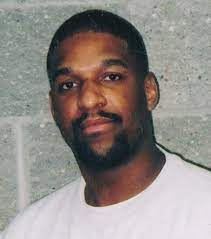
Anthony Boyd is scheduled to be executed by the State of Alabama on October 23 2025 for a murder that took place during a kidnapping
According to court documents Anthony Boyd along with Shawn Ingram and Marcel Ackles would kidnap Gregory Huguley due to a drug debt. Huguley would later be murdered by being doused with gasoline and set on fire. Apparently Boyd duct taped the victims feet together and another man committed the actual murder
Anthony Boyd would be arrested, convicted and sentenced to death
Shawn Ingram would be sentenced to death and Marcel Ackles would be sentenced to life without parole
Anthony Boyd would insist that he is innocent of the murder of Gregory Huguley with his lawyers insisting that he was not at the murder
Anthony Boyd is scheduled to be executed by nitrogen gas
Update -Anthony Boyd was executed on October 23 2025 by nitrogen gas
Anthony Boyd Execution News
Family members and supporters of an Alabama inmate scheduled to be executed this month pleaded Wednesday for the state to spare his life as he maintained he did not commit the 1993 murder.
Anthony Boyd, 53, is scheduled to be executed by nitrogen gas on Oct. 23. A judge sentenced Boyd to death for his role in the in the 1993 killing of Gregory Huguley in Talladega. Prosecutors said Boyd taped Huguley’s feet together before another man doused him with gasoline and set him on fire over a $200 cocaine debt.
Standing in front of a billboard reading “Save Anthony Boyd,” family members and supporters held a news conference in Talladega to ask the state to halt the execution. The nonprofit Execution Intervention Project and Boyd’s spiritual adviser, the Rev. Jeff Hood, organized the event. The group is placing billboards across the state.
During the news conference, Boyd called from William C. Holman Correctional Facility and spoke via speaker phone.
“I didn’t kill anybody. I didn’t participate in any killing,” Boyd said. At his trial, Boyd’s lawyers maintained he was at a party that night and did not commit the murder.
A witness at the trial testified as part of a plea agreement and said that Boyd taped Huguley’s feet together before another man doused him in gasoline and set him on fire. A jury convicted Boyd of capital murder during a kidnapping and recommended by a vote of 10-2 that he receive a death sentence.
Shawn Ingram, the man prosecutors accused of pouring the gasoline and then setting Huguley on fire, was also convicted of capital murder and is also on Alabama’s death row.
Alabama Attorney General Steve Marshall’s office released a statement that Boyd’s case has been litigated for three decades and, “he has yet to provide evidence to show the jury got it wrong.”
“There was no billboard campaign to save Huguley, and Boyd showed no concern for the ethics of execution when he helped murder Huguley,” according to the statement.
Alabama began using nitrogen gas last year to carry out some executions. The method uses a gas mask to replace breathable air with pure nitrogen gas, causing the inmate to die from lack of oxygen.
Hood, a spiritual adviser who witnessed the first nitrogen execution and is now working with Boyd, placed a gas mask on his face similar to the one used by the Alabama Department of Corrections. Hood said the new method does not deliver the swift death that the state promised.
“What I saw was almost eight minutes of heaving back and forth,” Hood said. Boyd’s mother became emotional and fell to the ground as Hood described what happened at the first nitrogen execution.
The state has argued in court filings that the described movements were either inmates actively resisting or “involuntary movements associated with dying.”
Boyd selected nitrogen as his preferred execution method after the state authorized the method, but at the time the state did not have procedures for using it.
Boyd has been on Alabama’s death row since 1995. He is the current chair of Project Hope to Abolish the Death Penalty, an anti-death penalty group founded by men on death row.
“I want people to know that people on death row are not the monsters that the public or the justice system portrays,” he said.
Anthony Boyd maintains innocence in 1993 murder as execution nears | AP News
Anthony Boyd Execution
An Alabama man convicted of helping to burn a man alive in 1993 over a $200 drug debt was executed by nitrogen gas on Thursday.
Anthony Boyd, 54, was pronounced dead at 6:33 p.m. local time at William C. Holman Correctional Facility, authorities said. The execution was carried out by nitrogen gas, a controversial method Alabama began using last year. Alabama tested the method for the first time on a condemned inmate in January 2024.
Boyd was sentenced to death for his role in killing Gregory Huguley in Talladega County. Prosecutors said Huguley was set on fire after he didn’t pay for $200 worth of cocaine.
Boyd used his final words to proclaim his innocence and criticize the criminal justice system.
“I didn’t kill anybody. I didn’t participate in killing anybody,” he said. “There can be no justice until we change this system,” he continued, before closing with, “Let’s get it.”
The execution appeared to take longer than prior nitrogen gas executions. The state does not reveal the exact time the gas began flowing.
At about 5:57 p.m., Boyd clenched his fist, raised his head off the gurney slightly and began shaking. He then raised his legs off the gurney several inches. At about 6:01 p.m., those movements stopped, and he began a series of heaving breaths that lasted at least 15 minutes before becoming still.
On Thursday, Boyd had nine visitors, two phone calls, accepted his breakfast, refused his lunch and dinner, and declined a final meal request, the Alabama Department of Corrections said in a news release.
Boyd requested to meet with Alabama Gov. Kay Ivey, during a news conference on Wednesday hosted by the Execution Intervention Project and his spiritual adviser, the Rev. Jeff Hood. Boyd said in a recorded message that the governor should “come sit down” with him and “have a conversation with the guy you deemed one of the worst of the worst.”
A prosecution witness at Boyd’s trial testified as part of a plea agreement and said that Boyd taped Huguley’s feet together before another man doused him in gasoline and set him on fire. Defense lawyers said he was at a party on the night Huguley was killed.
A jury convicted Boyd of capital murder during a kidnapping and recommended by a vote of 10-2 that he receive a death sentence.
Boyd had been on Alabama’s death row since 1995. He was the latest chair of Project Hope to Abolish the Death Penalty, an anti-death penalty group founded by men on death row.
Alabama began using nitrogen gas last year to carry out some executions. The method uses a gas mask strapped over the inmate’s face to replace breathable air with pure nitrogen gas, causing the person to die from lack of oxygen.
Nationally, the method has now been used in eight executions: seven times in Alabama and once in Louisiana.
Boyd’s lawyers had asked a federal judge to halt the execution to give the method more scrutiny. A federal judge declined the request. She ruled Boyd was unlikely to prevail on claims that the method, which has been used multiple times, is unconstitutionally cruel.
The U.S. Supreme Court on Thursday afternoon also denied Boyd’s request to stay the execution and instead let him die by firing squad. Justice Sonia Sotomayor authored a scathing dissent joined by Justices Elena Kagan and Ketanji Brown Jackson.
Sotomayor, citing witness description of past nitrogen gas executions, wrote that there is “mounting and unbroken evidence” that the method is unconstitutional. She wrote that “allowing the nitrogen hypoxia experiment to continue” fails to protect the dignity of the nation.
Earlier this year, Boyd pushed for execution by firing squad, hanging or medical-aid-in-dying instead, arguing nitrogen hypoxia is unconstitutionally cruel.
Alabama has maintained that any shaking or gasping exhibited by inmates during nitrogen gas executions are largely involuntary actions caused by oxygen deprivation.
Alabama executes inmate with nitrogen gas for 1993 murder over $200 drug debt – CBS News