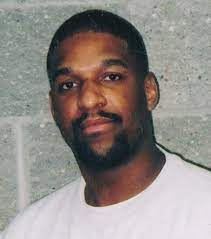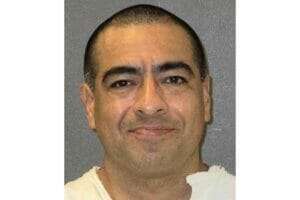
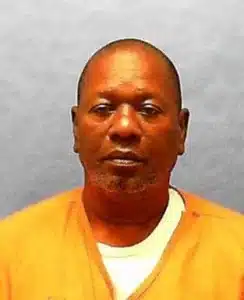
Melvin Trotter is scheduled to be executed by the State of Florida on February 24 2026 for a murder committed nearly forty years ago
According to court documents Melvin Trotter would rob a grocery store owned by Virgie Langford. During the robbery Virgie Langford would be brutally attacked and she would later die from a heart attack that was caused by her injuries
Melvin Trotter would be arrested, convicted and sentenced to death
Melvin Trotter was executed by lethal injection on February 24 2026
Melvin Trotter Execution News
Virgie Langford was ready for retirement.
For five decades, the 70-year-old ran a mom-and-pop grocery store in Palmetto along Florida’s Gulf Coast. The neighborhood had gotten dangerous, Langford got tired, and her four children convinced her it was time to enjoy retirement and her new house in the suburbs.
But she hadn’t quite closed up shop yet. On June 16, 1986, Langford was selling some of the last of her inventory when a crack addict named Melvin Trotter walked into Langford’s Grocery Store and started stealing from the cash register. Soon after, he stabbed Langford seven times with a butcher knife that had a nearly foot-long blade, according to archived news reports.
Now 40 years later − decades longer than her loved ones thought it would take − Florida is set to execute Trotter, now 65, by lethal injection on Tuesday, Feb. 24. It will be the fourth execution in the U.S. this year and the second in Florida, which broke a state record last year when it carried out 19 executions.
Langford’s family has waited so long for justice, obituaries show that at least one of her four children died 15 years ago at the age of 72.
“I think he deserves to burn,” one of Langford’s daughters, Liz Matthews, told the Sarasota Herald-Tribune in 1987. Her other daughter told the newspaper that she was a Christian, but firmly believed that Trotter deserved to be executed.
“My mom, she was a fine lady,” Christine McKnight told the newspaper. “She worked hard all her life and she didn’t deserve to die the way that she did.”
Here’s what you need to know about the execution.
Melvin Trotter is set to be executed by lethal injection at 6 p.m. ET on Tuesday, Feb. 24, at the Florida State Prison in Raiford.
On June 16, 1986, 70-year-old Virgie Langford was alone in her grocery store in Palmetto, Florida, and cutting meat in the back, according to archived reports in the Sarasota Herald-Tribune.
Melvin Trotter walked in and began rifling through the cash register, grabbing about $100 and some food stamps.
It’s unclear whether Langford then confronted Trotter or whether he sought her out. But somehow, he ended up with the butcher knife she had been using to cut meat and then using it to stab the grandmother seven times, archived news reports say.
“What he did was brutal and sadistic,” prosecutor Baron Given told jurors at trial, the Herald-Tribune reported.
Trotter fled the scene and used the stolen money to buy rock cocaine. Langford initially survived the stabbing and identified her attacker before dying of cardiac arrest on the way to emergency surgery.
Trotter’s attorneys argued that he should be spared because he was high on crack when he committed the murder and had no control over his behavior.
“Premeditated first-degree murder is not committed in the manner that the state would have you believe Virgie Langford met her death,” Trotter’s attorney, Peter Dubensky, told jurors, according to the newspaper. “One does not premeditate murder when one arrives at the scene unarmed.”
Virgie Langford was a hard-working mother of four who loved running her corner grocery store and continued doing so after she divorced her children’s father, according to a community message written by the children and published in the Bradenton Herald.
“How sad that we had finally convinced our mother to retire … and enjoy the house in the suburbs she had worked so hard for and had recently purchased,” they wrote. “How sad that in a moment of rage due to the need for money, drugs, or reasons that we cannot comprehend, an innocent person should die in such a savage manner.”
Langford had operated the store since the late 1930s, seeing it through wars, political assassinations and the tensions of the Civil rights era. But Langford never judged her customers based on race, her children said.
“She taught all four of her children as we were growing up and doing our tour of duty in the family business one thing: ‘You observe and listen to the words and actions coming from within,’ no matter what color their skin may be or what language they spoke,” the wrote in the Herald.
They partly blamed their mother’s death on the “bureaucratic do-gooders of rehabilitation,” referencing how Trotter was able to commit the murder because he was sentenced to house arrest for a 1985 robbery in which he had pinned a victim to the ground.
On the day Trotter was sentenced to death, Langford’s family told the Herald that they were prepared to wait up to 15 years for the execution. They had no idea it would take 40.
Those family members who spoke to reporters about the case were strongly supportive of the death sentence, though they would not all live to see the day.
Langford’s son-in-law, Gene Matthews, told the Herald in 1987: “I want to be there to see him burn.”
At the time, Florida death row inmates were executed by the electric chair, a practice that ended in the state in 1999 after a series of issues with the state’s chair known as “Old Sparky.”
In 1997 as an inmate named Pedro Molina was executed, flames shot from his head, causing officials to decide to replace the chair, according to the American Civil Liberties Union. When a new chair was used on inmate Allen Davis in 1999, witnesses reported that blood poured from his mouth, indicating he was in an unusual amount of pain before dying, a violation against U.S. constitutional protections against cruel and unusual punishment for all Americans, even death row inmates.
The next execution in the U.S. will be on March 3, when Florida is set to execute Billy Leon Kearse for the murder of Fort Pierce Police Officer Danny Parrish on Jan. 18, 1991. Kearse was convicted of fatally shooting Parrish with his own service weapon 13 times after disarming the officer during a traffic stop.
It will be Florida’s third execution of the year, more than any other state. Last year, Florida set a state record by putting 19 inmates to death as Gov. Ron DeSantis has made the death penalty a recent priority. The previous state record had been eight executions.
Florida execution of Melvin Trotter comes 40 years after grandma’s murder
Melvin Trotter Execution
Florida has executed its second inmate of the year even as a Supreme Court justice questioned the state’s “deeply troubling” record on lethal injections and how it “shrouds its executions in secrecy.”
Melvin Trotter, 65, was executed by lethal injection on Tuesday, Feb. 24, for the 1986 murder of 70-year-old Virgie Langford, a mother of four who was on the verge of retirement when she was stabbed to death in the corner grocery store that she owned for five decades.
Trotter − whose last meal was fish, cornbread, cake, and soda − was pronounced dead at 6:15 p.m. ET. It was the fourth execution in the U.S. this year and the second in Florida, which broke a state record last year when it carried out 19 executions.
The U.S. Supreme Court cleared the way for Trotter’s execution on Tuesday by denying his application for a stay, but Justice Sonia Sotomayor said she was “deeply troubled” by the state’s record on lethal injections.
She said death row inmates haven’t been able to prove their suspicions that the state is using expired drugs and engaging in other questionable practices because the Florida Supreme Court hasn’t allowed the inmates access to documents that could back up their claims.
“By continuing to shroud its executions in secrecy, Florida undermines both the integrity of its own execution process and, potentially, this Court’s ability to ensure the State’s compliance with its constitutional obligations,” she wrote.
Neither the Florida Attorney General’s Office nor the state’s Department of Corrections responded to USA TODAY’s requests for comment on Sotomayor’s opinion.
Here’s what you need to know about Trotter’s execution, more about the controversy surrounding Florida’s executions and who the 70-year-old victim in the case was.
Supreme Court Justice Sonia Sotomayor is questioning Florida’s execution practices following a filing from Melvin Trotter’s attorneys on Feb. 19.
The filing says that Florida appears to have used expired drugs in seven executions last year, citing heavily redacted drug logs from the Florida Department of Corrections obtained through separate litigation. Trotter’s attorneys argue that using expired drugs may cause unnecessary pain and suffering during executions, which would violate the U.S. Constitution’s protections against cruel and unusual punishment. Those protections apply even to death row inmates.
In the state’s response to the allegations, Florida argued that Trotter’s claims are speculative because the records aren’t conclusive. But, as Sotomayor points out, the state “provides no assurances that it has not (and will not) use expired substances in its executions.”
She continued to say that “the record reflects at least the possibility” that recent Florida executions have involved expired drugs, incorrect doses, the use of non-protocol drugs, and recordkeeping lapses “that could mask yet additional failings.”
She said the Florida Supreme Court recently denied requests for records that would prove or disprove the claims, which places inmates “in a Catch-22.” The prisoners have been denied records because the court has questioned their claims, but without the records they’re seeking, they can’t prove the claims, Sotomayor wrote.
“Individuals seeking to challenge the method of their execution should not have to guess at whether the State is, oris not, following its execution protocol,” Sotomayor said. “Nor does the State appear to have any legitimate confidentiality interest in shielding from inspection basic facts about the implementation of its execution protocol.”
If Florida is acting properly, “then transparency instills confidence in the protocol for everyone − prisoners, the courts, and the public alike,” she wrote. “If it is not, then secrecy is intolerable, and disclosure of the relevant records is Indispensable for determining whether the lapses at issue are likely to lead to an Eighth Amendment violation.”
On June 16, 1986, 70-year-old Virgie Langford was cutting meat in the back of the grocery store she owned in Palmetto, Florida, when Melvin Trotter walked in and began rifling through the cash register, grabbing about $100 and some food stamps, according to archived reports in the Sarasota Herald-Tribune, part of the USA TODAY Network.
It’s unclear whether Langford then confronted Trotter or whether he sought her out. But somehow, he ended up with her butcher knife and then used it to stab the grandmother seven times, archived news reports say.
“What he did was brutal and sadistic,” prosecutor Baron Given told jurors at trial, the Herald-Tribune reported.
Trotter fled the scene and used the stolen money to buy rock cocaine. Langford initially survived the stabbing and identified her attacker before dying of cardiac arrest on the way to emergency surgery.
Trotter’s attorneys argued that he should be spared because he was high on crack when he committed the murder and had no control over his behavior.
“One does not premeditate murder when one arrives at the scene unarmed,” Trotter’s attorney, Peter Dubensky, told jurors, according to the newspaper.
His attorneys have also argued that Trotter has long suffered from intellectual disabilities, pointing to school records, early IQ scores and testimony from family members describing Trotter’s limited ability to read, manage money or live independently. But prosecutors and courts, including the Florida Supreme Court, have repeatedly ruled that later evaluations showing higher cognitive functioning outweigh those early findings, reported the Herald-Tribune
For five decades, 70-year-old Virgie Langford ran a mom-and-pop grocery store in Palmetto along Florida’s Gulf Coast. The neighborhood had gotten dangerous, Langford got tired, and her four children convinced her it was time to enjoy retirement and her new house in the suburbs.
But she hadn’t quite closed up shop yet. On June 16, 1986, Langford was selling some of the last of her inventory when a crack addict named Melvin Trotter walked into Langford’s Grocery Store and started stealing from the cash register. Soon after, he stabbed Langford seven times with a butcher knife that had a nearly foot-long blade, according to archived news reports.
Langford’s family has waited so long for justice, obituaries show that at least one of her four children died 15 years ago at the age of 72.
“I think he deserves to burn,” one of Langford’s daughters, Liz Matthews, told the Sarasota Herald-Tribune in 1987. Her other daughter told the newspaper that she was a Christian, but firmly believed that Trotter deserved to be executed.
“My mom, she was a fine lady,” Christine McKnight told the newspaper. “She worked hard all her life and she didn’t deserve to die the way that she did.”
Langford had operated the store since the late 1930s, seeing it through wars, political assassinations and the tensions of the Civil rights era. But Langford never judged her customers based on race, her children said, according to a community message written by the children and published in the Bradenton Herald.
“She taught all four of her children as we were growing up and doing our tour of duty in the family business one thing: ‘You observe and listen to the words and actions coming from within,’ no matter what color their skin may be or what language they spoke,” they wrote in the Herald.
On the day Trotter was sentenced to death, Langford’s family told the Herald that they were prepared to wait up to 15 years for the execution. They had no idea it would take 40.
Langford’s son-in-law, Gene Matthews, told the Herald in 1987: “I want to be there to see him burn.”
At the time, Florida death row inmates were executed by the electric chair, a practice that ended in the state in 1999 after a series of issues with the state’s chair known as “Old Sparky.”
In 1997 as an inmate named Pedro Molina was executed, flames shot from his head, causing officials to decide to replace the chair, according to the American Civil Liberties Union. When a new chair was used on inmate Allen Davis in 1999, witnesses reported that blood poured from his mouth, indicating he was in an unusual amount of pain before dying, a violation against U.S. constitutional protections against cruel and unusual punishment.
The next execution in the U.S. will be on March 3, when Florida is set to execute Billy Leon Kearse for the murder of Fort Pierce Police Officer Danny Parrish on Jan. 18, 1991. Kearse was convicted of fatally shooting Parrish with his own service weapon 13 times after disarming the officer during a traffic stop.
It will be Florida’s third execution of the year, more than any other state. Last year, Florida set a state record by putting 19 inmates to death as Gov. Ron DeSantis has made the death penalty a recent priority. The previous state record had been eight executions.
Florida executes Melvin Trotter for ‘sadistic’ murder of grandmother